ONOZU — AUSTRALIA
A Quiet Section of Coast
Beyond the busier access path, rock shelves, low plants and repeating waves create a quieter measure of the coast.
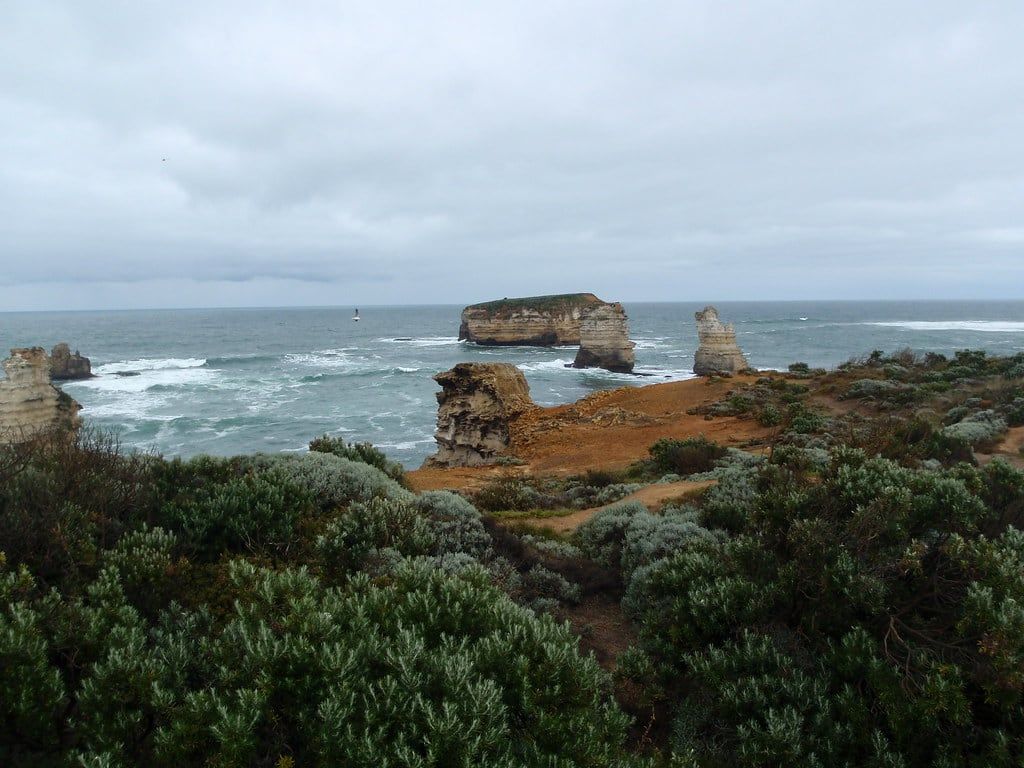
coastline Victoria Australia by Cole Vassiliou. Source, licensed under CC BY 2.0. Auto-oriented, resized, metadata stripped, and recompressed; responsive AVIF/WebP derivatives are generated at build time.
A short distance from a main beach access, the coast can become quieter without becoming remote. The broad path narrows, low plants close around its edges, and the sound of conversation falls behind the wind. Ahead, a rock shelf interrupts the sand and extends into blue-grey water.
The shelf looks level from a distance, but its surface contains shallow pools, narrow cracks, and ledges darkened by each wave. Water remains after the foam withdraws. In the pools, the sky is steadier than the sea beyond, disturbed only when wind crosses the surface or another wave reaches high enough to refill them.
Life close to the ground
Coastal plants keep a low profile. Their stems spread sideways through sand and between stones, avoiding the full force of salt wind. Leaves are often small, thick, or softly covered. These forms hold moisture and reduce exposure, but they also create varied textures: tight mats, upright seed heads, and isolated patches of green among pale rock.
The path curves around this growth rather than taking a direct line. Old footprints leave shallow depressions where sand has collected. Where people have stepped beyond the edge, stems are broken and the ground is lighter. The contrast makes the value of a narrow, established track visible.
Seabirds use the rock shelf as a resting place between movements along the coast. They face the wind, spaced apart, and lift together when a larger wave crosses the outer edge. Once the water drains away, a few return to almost the same positions.
Repetition without sameness
From above, each set of waves follows a familiar sequence. A darker line forms offshore, rises, then folds into white water. Yet the result on the shelf varies with every arrival. One wave fills a channel; the next sends spray upward; another loses most of its energy before reaching the rocks.
Winter light remains low and clear. Cloud shadows pass over the sea, dividing it into broad areas of steel and blue. Near sunset, the rock retains little warmth and the wind becomes more noticeable. The quiet here is not an absence of activity. It comes from repeated natural movements—water advancing, plants bending, birds leaving and returning—without the need for anything to hold attention for long.