ONOZU — AUSTRALIA
Eucalyptus After Rain
Rain deepens the colour of eucalyptus bark and gathers a clean, resinous scent beneath the canopy.
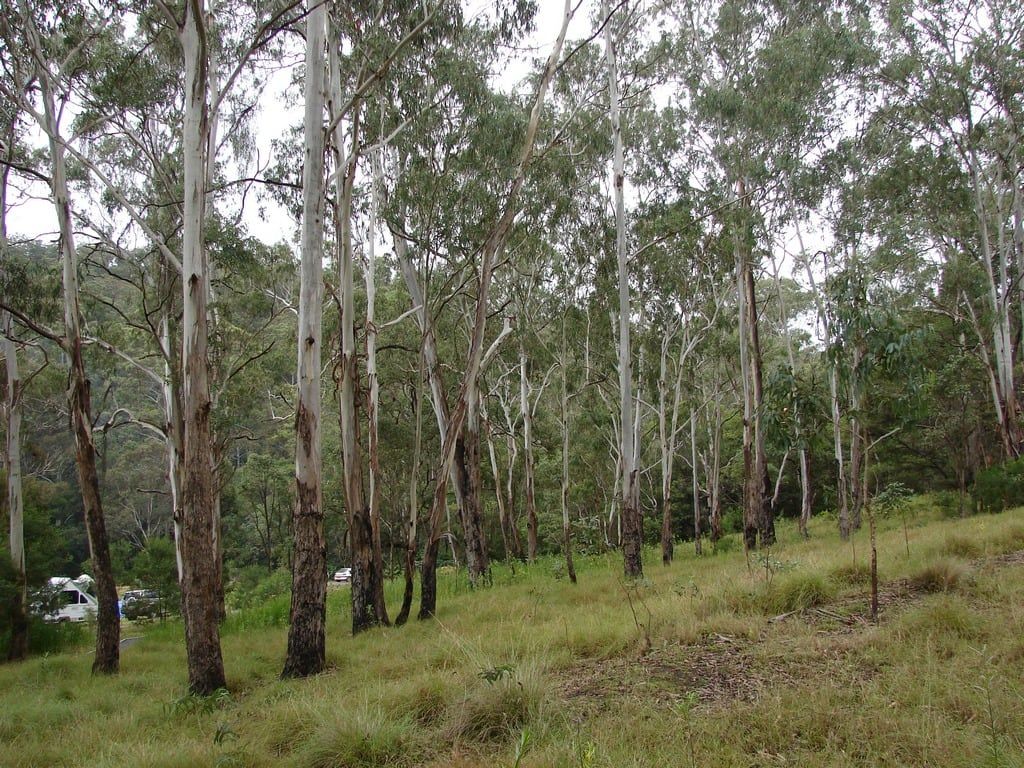
Eucalyptus at the camping area by Tatters ✾. Source, licensed under CC BY 2.0. Auto-oriented, resized, metadata stripped, and recompressed; responsive AVIF/WebP derivatives are generated at build time.
Rain alters a eucalyptus woodland without making it still. Water travels down smooth sections of trunk, pauses at rough bark, and drops from narrow leaves long after the main shower has passed. The ground becomes a mosaic of dark soil, pale fallen bark, wet stones, and leaves turned glossy by water.
Under cloud, the familiar muted colours become more varied. Cream bark appears warmer beside sections of grey and rust. Freshly exposed surfaces are bright, while older ribbons lie curled at the base of the tree. Water collects along these loose strips before falling in large, irregular drops.
Scent beneath the canopy
The change in scent is immediate. Damp soil provides a low, earthy base, while crushed leaves and wet bark add a sharper resinous note. The air does not smell the same everywhere. It is strongest in sheltered ground where little wind passes, then fades along an open track.
Leaves hold rain differently according to their angle. Some guide water toward the stem; others release it from a pointed tip. A branch moved by a bird or brief gust can send down a sudden scatter, making the shower seem to begin again. Beneath denser trees, the delayed drops create overlapping circles in shallow puddles.
Bird calls resume gradually. One voice begins from beyond the wet canopy, then another answers closer to the path. Insects remain quiet for longer. Without their usual background sound, the separate movements of water, leaves, and wings are easier to distinguish.
Colour returning to dry forms
Sunlight may arrive through a break in the cloud before the ground begins to dry. It catches the upper leaves and makes water points flash briefly. Lower trunks remain subdued, their colours deepened by moisture. Steam is not visible, yet the air near sunlit soil becomes warmer and carries scent more strongly.
By afternoon, open sections of the track have lightened. Shade retains dark patches, and water stays in bark creases and hollows. The woodland has not been transformed into a different place; rain has simply restored contrast to surfaces often joined by dust and dry light. For a short time, every trunk shows its own history of shedding, weathering, and holding water.